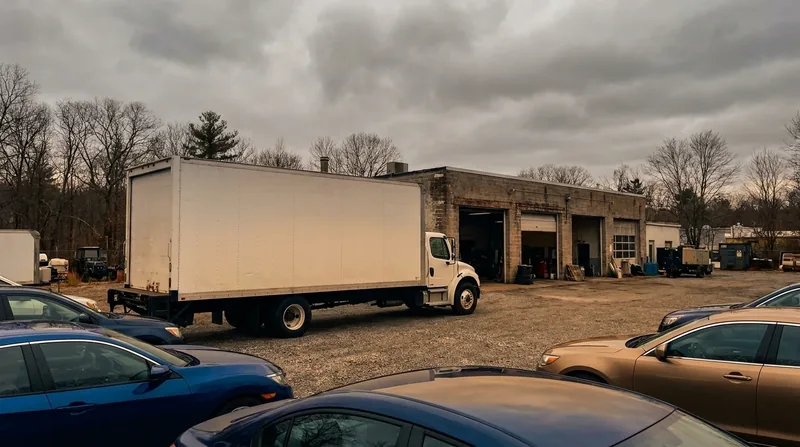
How to Get a Car Dealer License in Pennsylvania
How to Get a Car Dealer License in Pennsylvania
If you want to sell vehicles to the public in Pennsylvania, you need a dealer license from the State Board of Vehicle Manufacturers, Dealers and Salespersons. Most applicants call it the PA Vehicle Board, or simply the Board. This guide walks through the process in order, from choosing your license type to getting dealer plates from PennDOT, so you can see how the pieces fit together before you sign a lease or buy a bond.
Searches for how to get a dealer license in PA, a PA used car dealer license, or PA car dealer license requirements usually come down to the same questions. The short answer: you need an established place of business, a $20,000 surety bond before PennDOT will issue your dealer plates, a business entity and a name on file with the Department of State, the required state tax registrations, and an approved license from the Board. Each step is covered below.
Pennsylvania has no general business license that every company must hold, and it has no county business licenses. Your dealer license comes from the Board, so start there rather than looking for a statewide license that does not exist.
What You Need Before You Start
Gather these items before you file anything. A missing item is one of the most common reasons an application stalls.
- An established place of business that meets the Board's requirements (see Step 4)
- A surety bond in the amount of $20,000 (see Step 5)
- Your entity paperwork if you will operate as an LLC or corporation (see Step 2)
- A business name that is available on Department of State records (see Step 3)
- A Pennsylvania registered office address with a street and number, or a contract with a Commercial Registered Office Provider
- A federal Employer Identification Number, if you do not already have one, and a Pennsylvania tax account (see Step 7)
- Identifying information for every owner, officer and manager. Confirm the full list on the Board's application.
- Names of any salespeople you plan to employ, since each one needs an individual salesperson license (see Step 9)
- Funds for the fees in this guide plus the Board's own fees and your bond premium
Step 1: Confirm Which Dealer License You Need
The Board licenses more than one kind of dealer. A retail dealer sells vehicles to the public from a lot. A wholesale dealer sells to other dealers. A salvor deals in damaged or salvage vehicles. The salvor and wholesale rules are separate from the retail rules, so match your business plan to the right category before you commit money. Ask the Board to confirm the category in writing, along with any separate authorization you need for repair, service or recycling work.
Some dealers are treated differently for the bond. Farm equipment dealers and mobile home dealers are exempt from the $20,000 bond requirement described in Step 5. If you are planning a PA used car dealer license operation that also carries other products, confirm with the Board whether the exemption applies to your mixed inventory, because it may not.
Step 2: Form Your Business Entity
You can operate as a sole proprietor, but many dealers form an LLC or a corporation to separate personal and business liability. Talk to a Pennsylvania attorney about which structure fits your situation. Filings go through the Department of State's Bureau of Corporations and Charitable Organizations at file.dos.pa.gov.
For an LLC, the Certificate of Organization, Domestic Limited Liability Company (Form DSCB:15-8821), is filed with a Docketing Statement (DSCB:15-134A). The filing fee is $125. The Bureau asks filers to allow about 15 business days for processing. Expedited service is available online or in person only, in addition to the $125 fee: $100 for same day service if received before 10:00 a.m., $300 for 3 hour service if received before 2:00 p.m., or $1,000 for 1 hour service if received before 4:00 p.m. A separate $70 Special Processing fee can be added to have multiple same day documents filed in a specified order.
Pennsylvania LLCs have no publication requirement. There is no LLC franchise tax and no separate LLC annual tax. A standard LLC is taxed the same as its federal classification, so pass-through income is taxed to the owners at the flat 3.07 percent Personal Income Tax rate. An LLC taxed as a corporation pays the Corporate Net Income Tax, which is 7.49 percent for 2026. The LLC annual report costs $7 and is due January 1 through September 30 each year.
For a corporation, file Articles of Incorporation, For Profit, with a Docketing Statement, paying the same $125 filing fee. Notice of the filing must be advertised in two newspapers of general circulation, one preferably a legal journal, and proof belongs in the corporate minutes. The corporate annual report costs $7 and is due January 1 through June 30 each year.
Step 3: Choose and Protect Your Business Name
An LLC name must contain the term company, limited, limited liability company, or an abbreviation of one of those terms. It may not contain words implying a business corporation, such as corporation or incorporated. The name must also be distinguishable on Department of State records from any name already registered, so search the business database at file.dos.pa.gov/search/business before you settle on a name.
You can reserve a name for 120 days for $70 while you assemble the rest of your paperwork. If you will sell under a name that differs from your legal name, you also need a Registration of Fictitious Name (Form DSCB:54-311), which costs $70. File it with the Department of State, not the county. A commercial registered office provider cannot be listed on a fictitious name registration, because that filing requires a real principal place of business.
Step 4: Establish a Place of Business
The Board requires an established place of business, and this is where many applicants lose time. Do not sign a lease until you have the Board's written description of what it accepts. Ask the Board to list its requirements for the building, the display and inventory area, signage, business hours, telephone listing and any records or equipment it expects to see during an inspection. Confirm each point directly with the Board rather than relying on a summary from another website.
Your place of business and your registered office are two different things. Pennsylvania does not use registered agents. Every business filing must list a registered office address in Pennsylvania with a street and number, and a post office box alone is not accepted. If your business has no physical or mailing address in Pennsylvania, you may contract with a Commercial Registered Office Provider under 15 Pa.C.S. section 109 and list the provider's name and county of venue instead. Listing a provider without a contract can carry civil and criminal penalties.
Zoning and occupancy rules are set by your municipality, not the state, and Pennsylvania has no county business licenses. Your township or borough may require a zoning approval or occupancy permit for a car lot, so check with the municipal office before you lease.
Step 5: Post the $20,000 Surety Bond
Under 75 Pa.C.S. section 1335, PennDOT issues dealer registration plates only after the dealer posts a $20,000 bond. Farm equipment and mobile home dealers are exempt. The bond is written by a surety company, which charges a premium based on the applicant's credit and business history. That premium is a cost of doing business, not a government fee, and this guide does not state a typical amount. Get quotes from licensed surety providers, and confirm with the surety what the bond form must say and how it is filed with PennDOT.
Keep the bond active. If it lapses, your ability to use dealer plates is affected, so calendar the renewal well before the expiration date.
Step 6: Apply to the State Board
Submit your dealer application to the State Board of Vehicle Manufacturers, Dealers and Salespersons. Use the current form from the Board's page on pa.gov, because older copies of the form circulate online. The application will ask for your entity documents, your place of business details, owner and officer information, and the license category you chose in Step 1.
Ask the Board three questions before you file: whether it inspects the premises before approval, whether it runs a background check on owners, and how long review usually takes. This guide does not state those answers as settled facts.
Confirm the Board's application fee and dealer license fee on its page. Those fees are not part of the verified figures for this article, so do not budget from a number you read somewhere else until the Board confirms it.
Step 7: Register for State Taxes
Pennsylvania handles tax registration through myPATH. The PA-100 was retired in 2022, so ignore any guide that tells you to file it. Register at the Department of Revenue's page, Register My Business for Taxes, and set up the state tax accounts you need, such as the Sales, Use and Hotel Occupancy Tax License. The state sales tax rate is 6 percent. Confirm with the Department of Revenue how that rate and its filing schedule apply to vehicle sales, because vehicle transactions can involve their own rules.
Step 8: Get Dealer Registration Plates from PennDOT
After your bond is posted and your license is approved, PennDOT issues dealer registration plates. Confirm with PennDOT what it needs from you at this stage, including proof of the bond and the Board's approval, and how to order plates for dealer use. Do not operate dealer plated vehicles until PennDOT has issued your plates.
Step 9: License Your Salespeople
Each person who sells vehicles for you needs a salesperson license. The initial salesperson license is $70, and the renewal is $141. A salesperson may be licensed to only one dealer at a time, so a salesperson cannot be listed with two dealerships. If a salesperson changes employers, confirm with the Board how the change is processed before the new dealer puts that person on the floor.
Step 10: Stay Compliant After You Open
Licensing does not end at approval. Calendar these items: the LLC annual report by September 30 ($7), the corporation annual report by June 30 ($7), bond renewal before the expiration date, salesperson renewals at $141 each, and the filing schedule on your state tax account. If you move, change your registered office or change your place of business, check whether the Department of State and the Board need to be notified.
Common Mistakes to Avoid
- Looking for a general or county business license. Pennsylvania has neither for most businesses, and the Bureau of Corporations and Charitable Organizations does not issue activity licenses.
- Listing a post office box as your registered office.
- Signing a lease before you have the Board's written place of business requirements.
- Treating the $20,000 bond as a government fee. It is a surety product with its own premium.
- Listing one salesperson with two dealerships at the same time.
- Advertising or selling vehicles before your dealer license is approved.
- Following PA-100 instructions from older guides.
- Skipping the fictitious name registration when you sell under a trade name.
What Results to Expect
Your timeline depends on how complete your file is and how quickly each agency processes its part. A complete application, a confirmed location and an active bond give you the best chance of a smooth review. Once approved, you may be able to register vehicles with PennDOT and license your sales staff. Treat any timeline you read here as a planning estimate, not a guarantee, and expect the entity filing, the lease and the bond to overlap rather than happen in sequence.
Important Information
This article is informational content about Pennsylvania business formation and dealer licensing. It is not legal or tax advice. Dealer licensing involves the State Board of Vehicle Manufacturers, Dealers and Salespersons, PennDOT, the Department of State and the Department of Revenue, and each agency's rules can change. Work with a licensed Pennsylvania attorney to choose your business structure and review your dealership documents, and work with a CPA on sales tax and entity tax treatment. Confirm every fee and deadline on the agency's own page before you file.
Keep exploring: related Pennsylvania guides
- Skill Games in Pennsylvania After the 2026 Supreme Court Ruling
- How to Open a CBD, Hemp or Kratom Shop in Pennsylvania
- How to Open a Vape or Tobacco Shop in Pennsylvania
- How to Open a Gun Store in Pennsylvania
- How to Start an LLC in Pennsylvania
- Pennsylvania Business License
- How Much Does It Cost to Start a Business in Pennsylvania
- All Pennsylvania business types
- Every Pennsylvania guide in one place