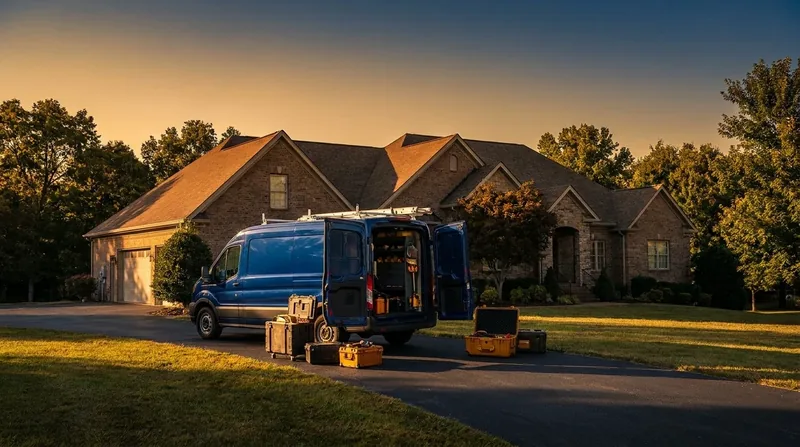
How to Start a Radon Testing or Mitigation Business in Pennsylvania: DEP Certification
How to Start a Radon Testing or Mitigation Business in Pennsylvania: DEP Certification
If you plan to test homes for radon or install radon mitigation systems for pay in Pennsylvania, you need certification from the Department of Environmental Protection (DEP). People often search for a pennsylvania radon license, but the state calls this a certification, not a license. It is issued under Pennsylvania's Radon Certification Act. This guide covers which certification you need, what you must complete before you apply, how to set up the business side, what the fees are, and how renewal works.
Disclaimer: This article is informational content, not legal or tax advice. Rules, fees, and forms can change. Confirm current requirements with DEP before you spend money, and talk with a qualified attorney or CPA before you choose a business structure or make tax decisions.
What Pennsylvania Requires
Pennsylvania's Radon Certification Act requires DEP certification for anyone who tests, mitigates, or runs a radon laboratory for pay. Each type of work is certified separately:
- Testing: measuring radon levels in homes and other buildings.
- Mitigation: designing or installing systems that reduce radon levels.
- Laboratory: analyzing radon samples.
Certification is available at the individual level and the firm level. An individual certifies as a person. A firm certifies as a business, and a firm must employ a certified individual. A company that sells testing services therefore needs at least one certified tester on staff, and the company itself needs a firm certification.
Pennsylvania has a strong reason to enforce this. Radon potential is high across the state, and the Reading Prong, a belt of uranium-bearing bedrock across southeastern Pennsylvania, is a known area of elevated indoor radon. Demand for testing and mitigation is steady, which is why many new firms start here.
Materials and Prerequisites Checklist
Gather these before you start the application so you are not stopped partway through:
- A DEP-approved radon course for each certification type you want
- A passing score on a DEP-approved radon exam, taken within 2 years before you apply
- A Pennsylvania street address for your registered office, or a Commercial Registered Office Provider (CROP) arrangement
- A business name that meets Department of State rules
- Formation documents if you form an LLC or corporation, plus the $125 filing fee
- A myPATH account for state tax registration
- Certification fees for each individual and firm (see the fee table below)
- A record system for test results, mitigation installs, and continuing education hours
- Business insurance and written customer contracts (confirm coverage with an insurance agent)
Step 1: Choose Your Certification Path First
Decide which work you will do before you buy courses or form a company. A testing-only business has different requirements and costs than a business that also installs mitigation systems. Laboratory certification is a separate track that most new firms do not need.
Decide whether you will certify as an individual, a firm, or both. Most small operators start by certifying themselves as an individual and then forming a firm so the business can be certified and hire staff. If you plan to hire testers, plan for the per-employee fee described below.
Step 2: Complete a DEP-Approved Course and Pass the DEP-Approved Exam
Individuals need both a DEP-approved course and a DEP-approved exam. You must pass the exam within 2 years before you apply. Check the date on your exam result when you plan your application. If the window closes before you submit, you will likely need to retake the exam, so confirm the rule with DEP.
Confirm that a course and exam are on DEP's approved list before you pay for them. A course that is not approved will not count toward your application, no matter how well it teaches the material.
Step 3: Set Up the Business Entity
Pennsylvania does not require a business license to operate a radon company, but you still need a legal structure and state registrations. Your choices are a sole proprietorship, an LLC, or a corporation.
- Sole proprietorship: No formation filing is required. If you operate under a name other than your own, register a fictitious name with the Department of State for $70 (Form DSCB:54-311).
- LLC: File a Certificate of Organization (Form DSCB:15-8821) with a Docketing Statement (DSCB:15-134A) for a $125 filing fee. The Bureau asks filers to allow about 15 business days for processing. Expedited service is available for an added fee, online or in person only.
- Corporation: File Articles of Incorporation for $125 and advertise notice of the filing in two newspapers of general circulation, one preferably a legal journal. Keep proof of publication in your corporate minutes.
An LLC name must contain the term company, limited, or limited liability company, or an abbreviation of one of those terms. It cannot include words that imply a business corporation, such as corporation or incorporated. The name must be distinguishable from names already on file. If you want to hold a name while you finish paperwork, a name reservation lasts 120 days and costs $70.
LLCs have no publication requirement. Pennsylvania has no LLC franchise tax and no separate LLC annual tax. A standard LLC is taxed the same way as its federal classification, so single-member and most multi-member LLC income passes through to the owners at the flat 3.07 percent Personal Income Tax rate.
Pennsylvania does not use registered agents. Every filing business must list a registered office with a street address and number in Pennsylvania. A post office box alone is not accepted. If you have no Pennsylvania address, you may contract with a CROP under 15 Pa.C.S. section 109 and list the CROP name and county of venue. Listing a CROP without a contract can carry civil and criminal penalties, and a CROP cannot be used where a principal place of business is required, such as a fictitious name registration.
Start the filing at the Business Filing Services portal at file.dos.pa.gov, and check name availability at the business search. Agency information is at the Department of State business page.
Step 4: Register for State Taxes Through myPATH
Pennsylvania retired the PA-100 in 2022. Tax registration is done through myPATH, the Department of Revenue's online system. Register at the Department of Revenue business registration page, and see the Department of Revenue home page for general information.
Pennsylvania's state sales tax rate is 6 percent. Confirm with the Department of Revenue whether any of your products or services are taxable before you register for a sales tax license. Do not assume that a testing fee or an installation fee is exempt or taxable without that confirmation.
Step 5: Check Local Rules
Pennsylvania has no general business license that every business must hold, and no county business licenses. That does not mean you can skip local rules. Your municipality may have its own zoning or home occupation rules, especially if you plan to store equipment or receive clients at home. Confirm these with your township or municipal office before you sign a lease or set up a home office.
Step 6: Apply to DEP and Pay the Fees
Submit your application to DEP with proof of your approved course and passing exam, then pay the fee for each certification type. Fees are paid every 2 years under 25 Pa. Code Chapter 240.
| Certification | Fee (every 2 years) |
|---|---|
| Testing, individual | $525 |
| Mitigation, individual | $450 |
| Laboratory, individual | $600 |
| Testing or mitigation firm | $1,050 |
| Laboratory firm | $1,125 |
| Each testing employee | $150 |
Two additional charges apply on top of the table. A fee of $50 applies for each mitigation system installed, and a $150 late fee applies if you miss a deadline. Confirm the current figures with DEP before you budget, and ask whether the owner counts as an employee for the per-employee fee.
As an example, a single owner who certifies as an individual tester and forms a testing firm would pay $525 plus $1,050, or $1,575 in certification fees, before the $125 LLC filing fee and any per-employee or per-install charges. Treat that as a planning estimate and confirm each figure with DEP.
Step 7: Keep the Certification Active
Radon certification lasts 2 years. At renewal you must show 16 hours of DEP-approved continuing education. Build a simple calendar with your renewal date and your CE hours so you are not scrambling in the final weeks. A late renewal triggers the $150 late fee, and you should confirm with DEP how a lapse affects your ability to take jobs in the meantime.
Do not let a firm certification lapse while its certified individual is still working. Test the timing of every renewal against your job schedule.
Step 8: Handle Mitigation Work Under HICPA
Radon mitigation counts as a home improvement under Pennsylvania's Home Improvement Consumer Protection Act (HICPA). Home improvement contractors must register with the Pennsylvania Attorney General. Confirm with the Attorney General's office whether your mitigation work requires registration and which contract and disclosure rules apply to your customers. Do not rely on a general summary of these rules for your own contracts.
Expected Results and How to Describe Them
Describe your services in terms of what they are designed to do. A correctly designed and installed mitigation system is designed to lower radon levels in the home. Results depend on the house, the soil, the foundation, the system design, and whether the system is maintained. Avoid promising a specific reading, a guaranteed level, or that radon will be eliminated.
A test is a measurement taken during a specific period. Short-term results reflect the conditions during the test, not the year-round average. Explain this to customers so they understand what a single result does and does not show.
Tips and Common Mistakes
- Calling it a license. Use the term DEP certification in your marketing, contracts, and invoices. Pennsylvania does not issue a radon license.
- Using an old exam. A passing exam must fall within the 2-year window before you apply. Check the date before you pay for the application.
- Using a PO box as your registered office. The Department of State requires a street address in Pennsylvania, or a valid CROP arrangement.
- Forgetting the LLC annual report. LLCs file the $7 annual report online from January 1 through September 30 each year. Calendar this date.
- Looking for a state general business license. Pennsylvania has none, so spend that time confirming municipal rules and DEP requirements instead.
- Not tracking per-install charges. The $50 mitigation fee applies to each system installed, so keep a clear installation log.
- Hiring testers before certifying them. A firm must employ a certified individual, and the per-employee fee applies to testing staff.
- Skipping the attorney and CPA. Structure, liability, and sales tax questions depend on your facts. Pay a professional to review them once, before you take customers.
Recommended Next Steps
- Decide whether you will test, mitigate, or both, and whether you need laboratory certification.
- Take a DEP-approved course and pass a DEP-approved exam within the 2-year window.
- Choose a business structure with an attorney or CPA, then file with the Department of State.
- Register your taxes through myPATH and confirm sales tax treatment with the Department of Revenue.
- Confirm municipal rules and insurance coverage.
- Apply to DEP, pay the fees, and calendar your renewal and continuing education deadlines.
Pennsylvania's Small Business Development Centers at pasbdc.org can help you review your business plan at no cost. For the legal and tax details that apply to your specific business, consult a qualified attorney or CPA. This article is informational only and is not legal or tax advice.
Keep exploring: related Pennsylvania guides
- How to Start a Pest Control or Lawn Spraying Business in Pennsylvania
- How to Start a Cleaning Business in Pennsylvania
- How to Start a Lawn Care Business in Pennsylvania
- How to Start a Junk Removal Business in Pennsylvania
- Pennsylvania Contractor License
- How to Start an LLC in Pennsylvania
- Pennsylvania Business License
- How Much Does It Cost to Start a Business in Pennsylvania
- All Pennsylvania business types
- Every Pennsylvania guide in one place